


 English
 中文简体
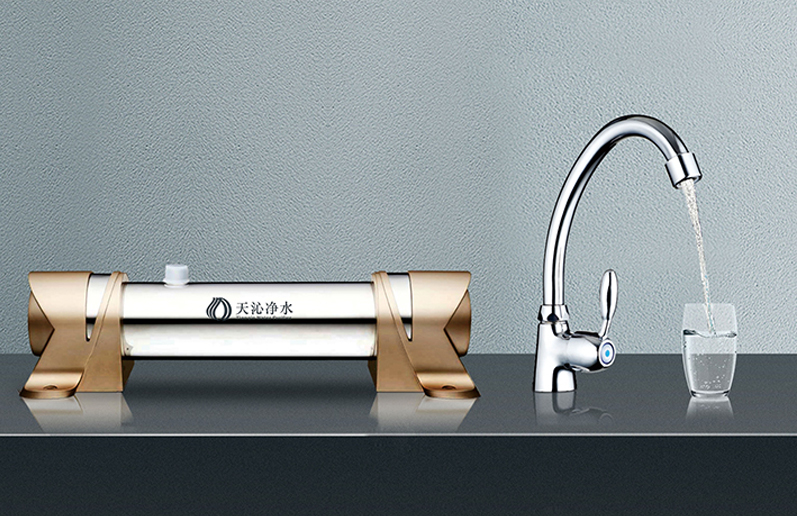
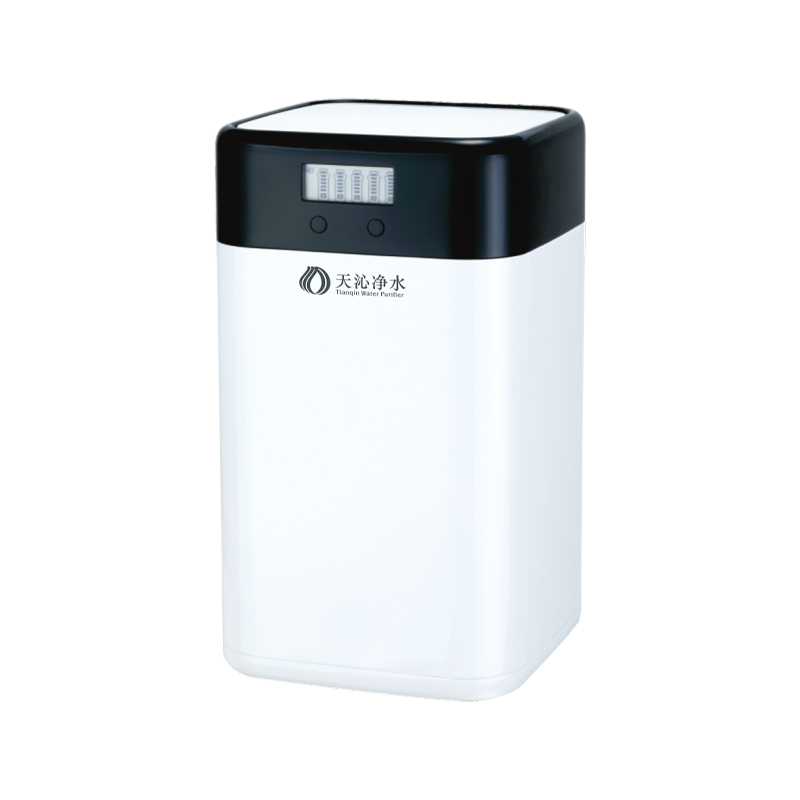
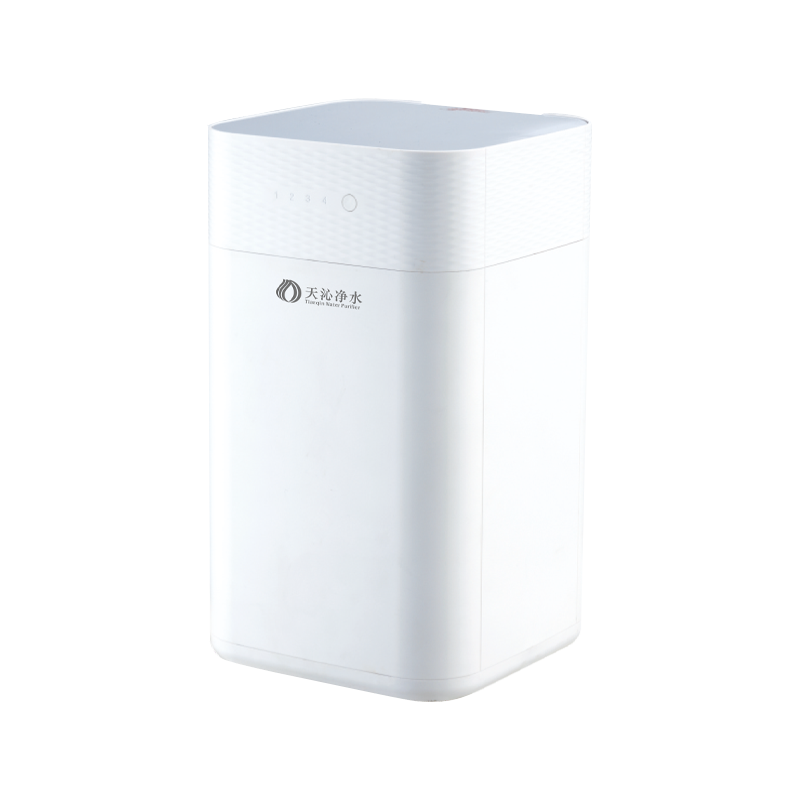
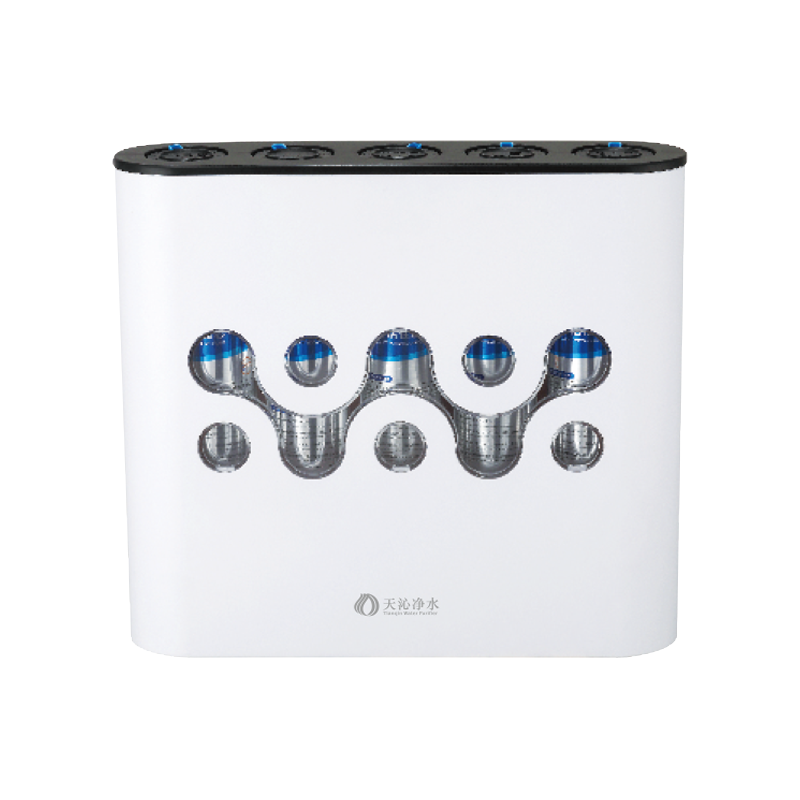

Plastic Ultrafiltration Machines Manufactured in Yuyao Since 1998
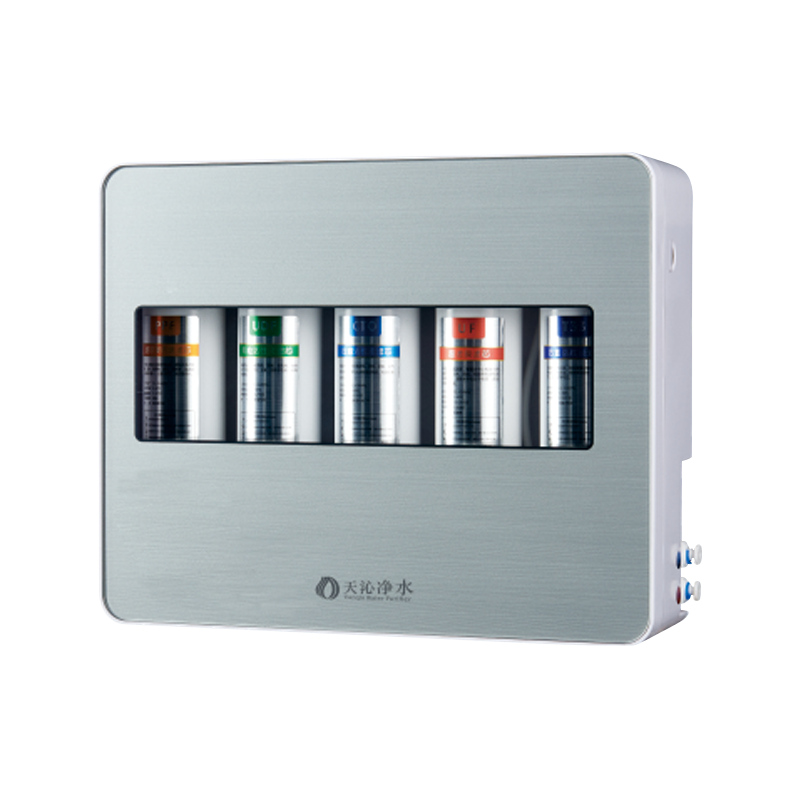
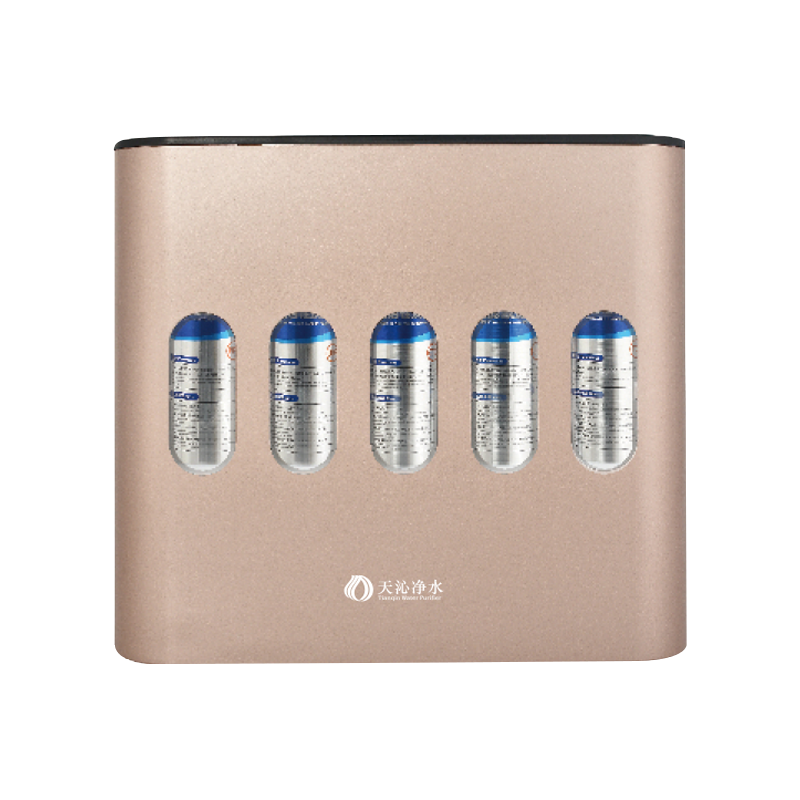
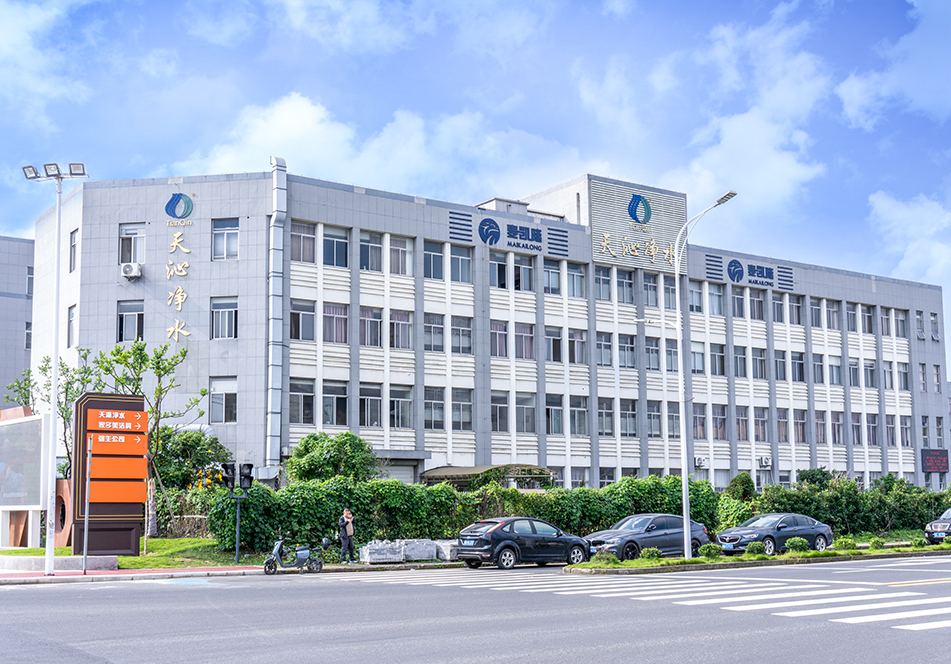
Yuyao Tianqin Water Purification Equipment Co., Ltd. has produced water purification equipment in Wuma Industrial Zone, Lubu Town, Yuyao City, Zhejiang Province, China since 1998. As a Plastic Ultrafiltration Machine manufacturer, we build five cartridge-based models — TQ-A08, TQ-A09, TQ-A12, TQ-A13 and TQ-A15 — around hollow-fibre ultrafiltration membranes with pore sizes between 0.01 and 0.1 micron, housed in corrosion-resistant plastic bodies.
The platform sits above simple sediment cartridges in filtration performance and below our stainless steel vessels in weight and cost. It serves household drinking points, light commercial outlets, and pre-treatment duty ahead of reverse osmosis, UV or polishing stages, where turbidity, rust, chlorine and microbiological load must be brought under control without a pressure vessel or a large skid.
Our Range: Five Models, Five Duty Profiles
| Model | Filtration configuration | Primary duty | Typical installation |
|---|---|---|---|
| TQ-A08 | Four-stage filtration with UF membrane | General municipal supply: sediment, fine particles, chlorine | Under-sink and wall-mounted household, office and shop points |
| TQ-A09 | Easy-change cartridge stack | High-turnover sites needing frequent, tool-light cartridge exchange | Rental fleets, canteens, distributor service programmes |
| TQ-A12 | Dedicated chlorine-reduction stage ahead of the membrane | Chlorinated municipal water with pronounced taste and odour | Food service, drinking stations, beverage and coffee feed lines |
| TQ-A13 | Rust and particulate control stage with UF polishing | Older steel pipework, tank-fed buildings, rusty tap water | Apartment blocks, schools, workshops, staff facilities |
| TQ-A15 | Fine sediment stage for visible solids and red worm | Well, surface or stored water carrying grit and organic debris | Rural households, small communities, post-tank duty |
All five models share the same membrane platform and plastic housing family, so spare cartridges, seals and training carry across a mixed order. Selection between them is driven by the contaminants present in the feed water, not by flow rate alone.
Application Fit Across the Range
- Household drinking water: point-of-use protection where supply is chlorinated and intermittently turbid.
- Light commercial outlets: canteens, clinics, schools and offices running continuous daytime draw-off.
- Pre-treatment ahead of RO: membranes and resin beds stay cleaner when suspended solids are removed first; a Stainless Steel Pre-Filter is used upstream where solids loading is heavy or pressure is high.
- Tap-mounted alternatives: where space above the sink is the binding constraint, our Faucet Ultrafiltration Machine covers the same membrane duty in a smaller envelope.
- Post-tank and well supply: stored water carrying rust, grit or red worm is handled by the sediment-focused models before any downstream polishing stage.
The membrane retains minerals while rejecting suspended matter, colloids, bacteria, viruses and macromolecular organics. That balance matters where the treated water is drunk directly rather than demineralised, and it is the reason the plastic platform is often specified as the final barrier rather than a polishing step after RO. Larger stainless steel variants within our Ultrafiltration Machine range cover higher capacities and higher-pressure duty.
Materials, Construction and Service Access
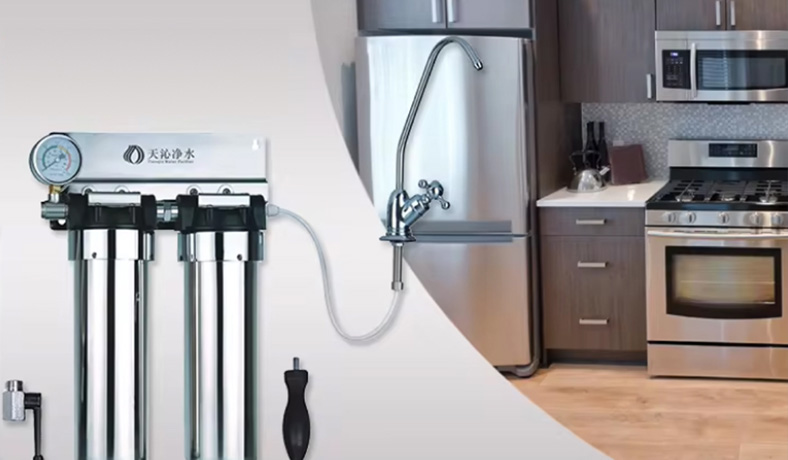
Bodies, covers and cartridge housings are moulded in high-quality plastic selected for corrosion resistance and anti-ageing behaviour, which keeps weight and freight cost down and allows wall-mounted or under-sink mounting without structural reinforcement. The integrated layout holds the cartridge stack, membrane module and connections in one compact envelope, so the machine occupies little space and can be moved or repositioned during a refit.
- Quick-change cartridge interface — the filter stack is released and replaced in seconds on the TQ-A09 and the same interface family is used across the range.
- Modular components — membrane module, housings, inlet valve, bracket and seals are individually replaceable rather than moulded into a single sealed body.
- Seal and port design — O-ring seats and threaded ports are sized to the connector standard agreed for the destination market.
- Hygienic internal surfaces — flow paths are smooth and free of dead pockets to limit biofilm formation between service intervals.
Specifications We Fix at Quotation
| Parameter | What we confirm | Effect on the installation |
|---|---|---|
| Membrane pore size | 0.01–0.1 micron, matched to the target contaminant | Defines retention of bacteria, colloids and fine turbidity |
| Feed water condition | Turbidity, iron, chlorine, hardness and temperature range | Sets cartridge sequence and replacement interval |
| Inlet pressure | Working range and whether a booster pump or reducer is needed | Protects the membrane and stabilises output flow |
| Design flow | Peak and continuous draw-off for the point served | Sizes the membrane module and buffer capacity |
| Connections | Port thread, hose or push-fit standard, tubing size | Determines adaptors supplied and installation time |
| Flush method | Manual flush valve or timed automatic flush sequence | Controls fouling rate and drain connection requirements |
| Electrical and control | Supply voltage, control voltage and signal interface | Aligns with the destination market and host panel |
Controls, Automation and Line Integration
The control layer is configured around the line the machine serves. For standalone household and light commercial duty we supply the machine with its own inlet solenoid, pressure switch, flush timer and dry-run protection so it can run unattended between service visits. Where the unit is embedded in a larger plant, we provide volt-free contacts and status signals for the host PLC or building management system, and we agree signal naming with the integrator before the panel is wired.
Monitoring options cover outlet quality sensing, pressure-drop trending across the cartridge stack and run-hour logging. These are agreed per order rather than assumed, because the useful instrumentation depends on whether the operator is a household user, a facility technician or a remote service team.
Installation, Commissioning and Acceptance
- Confirm feed quality and pressure against the agreed specification before the machine is mounted.
- Mount on a level wall or bracket, connect inlet, outlet and flush lines, and check every joint for seating.
- Flush the new membrane and cartridges to drain to clear manufacturing residues and entrapped air.
- Pressure-test the assembly, then verify output flow and clarity at the draw-off point.
- Record the commissioning values on the handover sheet so later service visits have a baseline.
For distributor and project orders we supply commissioning checklists and, on request, remote support during first start-up so the site team works from the same acceptance sequence we use in production testing.
Quality System, Compliance and Documentation
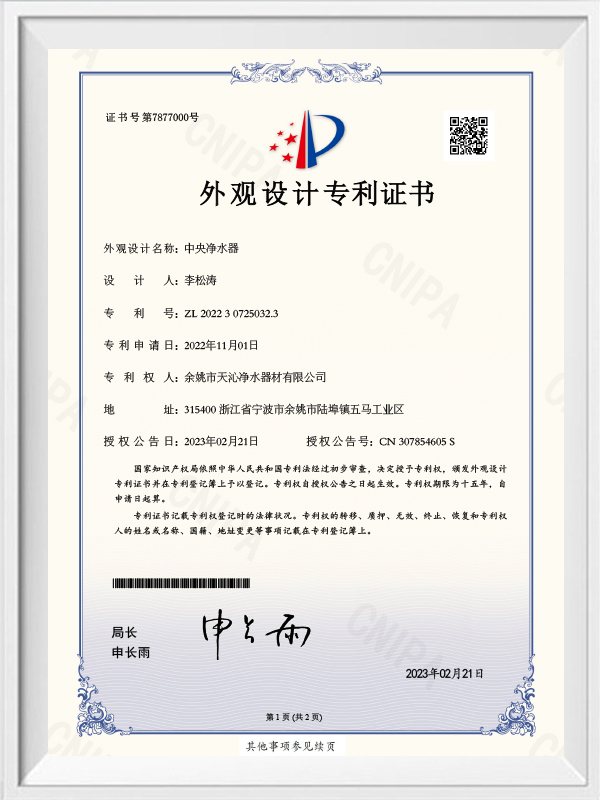
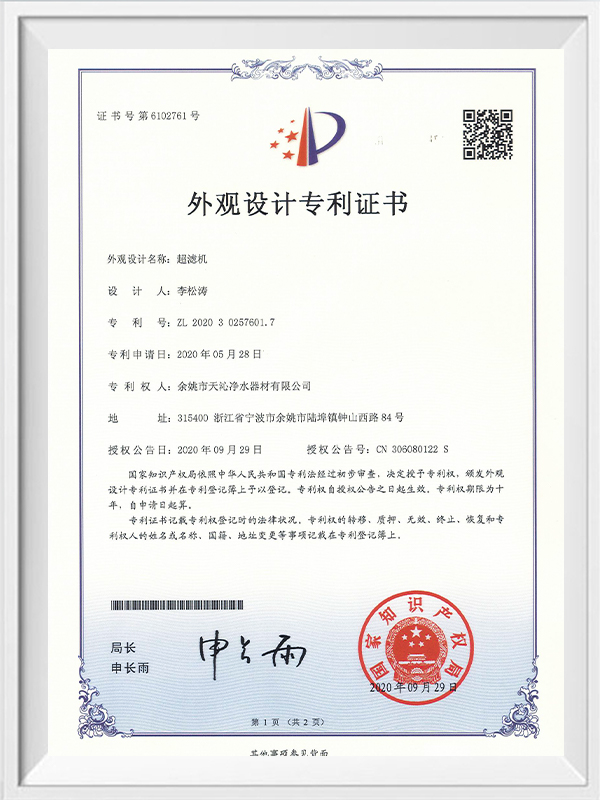
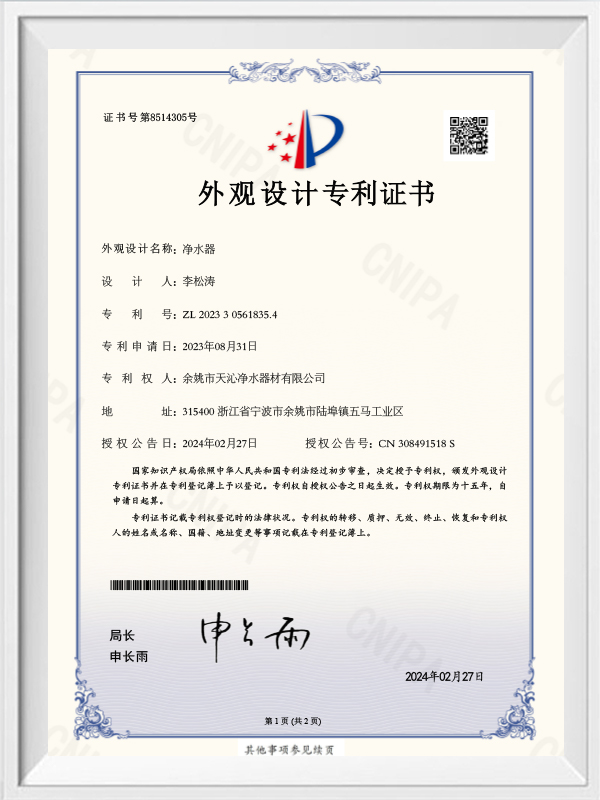
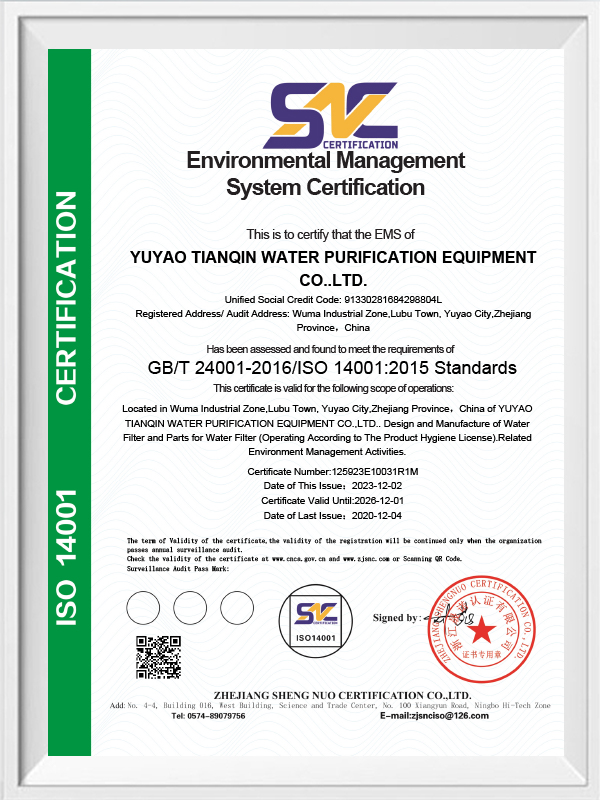
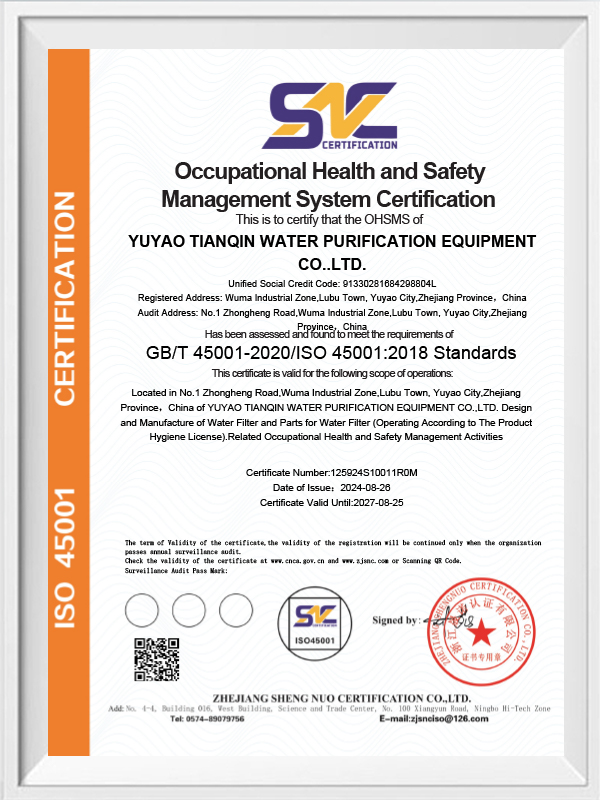
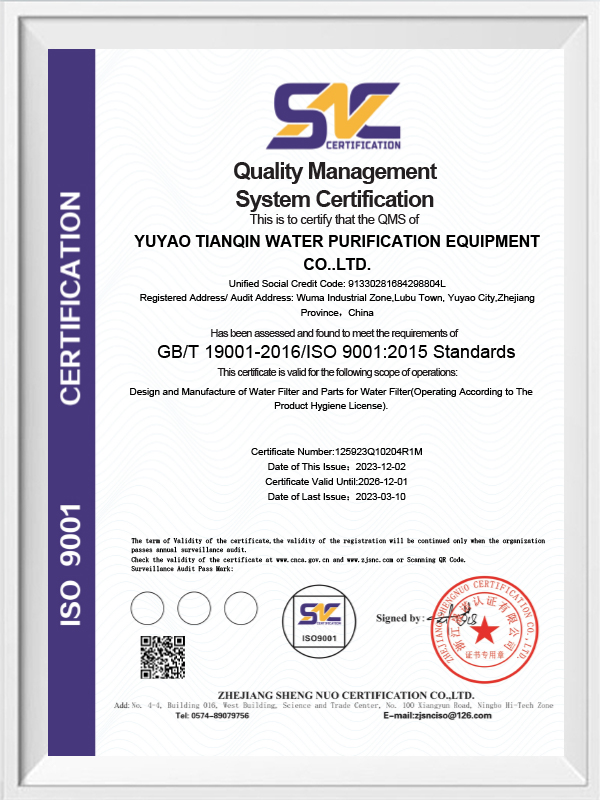
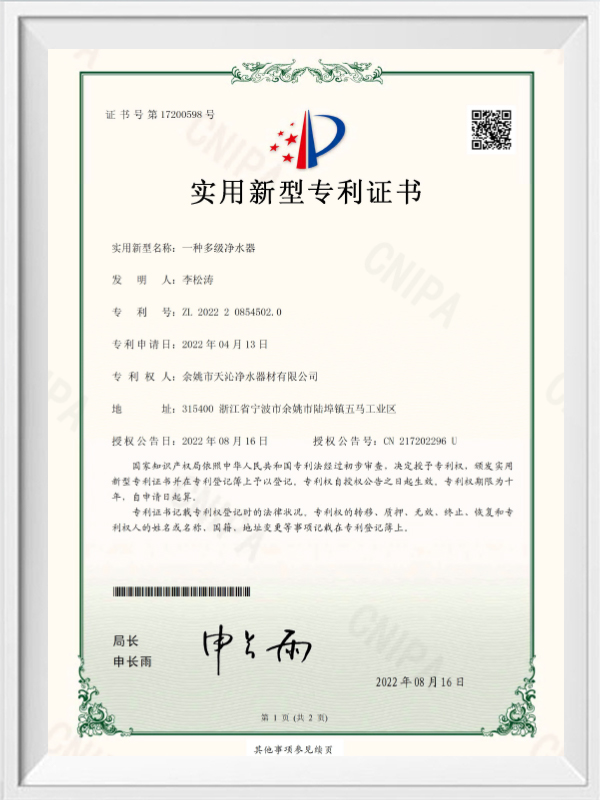
Production runs under an ISO9001 quality management system in a facility of around 30,000 square metres, supported by environmental and occupational health and safety management certification. We hold a health licence approval from the Ministry of Health of the People's Republic of China and are a member of the American Water Quality Association. Our patent portfolio covers more than ten national patents, including a design patent for an ultrafilter, and we are one of the enterprises that drafted the industry standard for ultrafiltration membrane water purifiers for household and similar uses.
- Incoming material checks on mouldings, membrane modules and cartridges.
- In-process assembly inspection and leak testing before packing.
- Documentation set: model drawing, bill of materials, cartridge list, installation sheet and maintenance log.
Maintenance, Consumables and Spare Parts
Cartridge replacement is driven by pressure drop and outlet clarity rather than a fixed calendar, although a nominal interval is issued with each unit for planning. The easy-change interface keeps downtime short, and the modular build means a damaged housing or valve does not condemn the whole machine.
- Consumables: sediment, chlorine-reduction and polishing cartridges, membrane modules.
- Spares: O-ring and seal kits, inlet solenoids, flush valves, brackets, port adaptors.
- Service aids: fault-finding chart, torque and seal guidance, flushing procedure.
Information We Use to Configure Your Solution
A workable proposal is built from the water and the installation, not from a catalogue number alone. These are the inputs we work through with each enquiry:
- Feed source and analysis: municipal, well, tank or surface water, with turbidity, iron, chlorine, hardness and TDS figures.
- Required flow at peak and continuous draw-off, and the number of outlets served.
- Available inlet pressure, pipe size and material at the connection point.
- Installation envelope: wall, cabinet, under-sink or skid, with drain availability for flushing.
- Electrical supply and any host panel, PLC or BMS interface required.
- Target water quality, destination market requirements, packaging and private-label artwork.
Packaging and Delivery Scope
Standard delivery covers the assembled machine, the cartridge set agreed for the duty, mounting bracket, connection fittings, installation and maintenance documentation. Export packing is specified per order for sea or air freight, and private-label cartons, manuals and rating plates are produced from customer artwork and confirmed before the run starts.
Frequently Asked Questions
Which model suits water that is rusty and heavily sedimented?
Start with the TQ-A13 where the problem is iron oxide from older steel pipework, and the TQ-A15 where visible grit or red worm is present in stored or surface water. If both loads are high, we normally specify a coarser pre-filter stage ahead of the ultrafiltration machine to extend cartridge life.
What does the ultrafiltration membrane remove and what does it keep?
The hollow-fibre membrane operates with pore sizes between 0.01 and 0.1 micron. It intercepts suspended solids, colloids, bacteria, viruses and macromolecular organics, while dissolved minerals remain in the treated water — which is why the units are used as drinking water barriers rather than as demineralisation equipment.
Can you supply private-label units and custom connections?
Yes. We develop and produce according to drawings or samples, and we produce private-label housings, cartons, manuals and rating plates. Port thread, tubing standard, control voltage and cartridge sequence are fixed at order confirmation, so the units arrive ready for the destination market.
How quickly can cartridges be changed on site?
The quick-change interface is designed for a tool-light exchange measured in seconds, so routine cartridge service does not require draining the line or removing the machine from its bracket. The same interface family runs across the five models, which simplifies spare stock for distributors and multi-site operators.
Can the machine be tied into an existing control panel?
We configure the control layer around the host line and can provide volt-free status and alarm contacts for a PLC or building management system, together with inlet solenoid, flush timer and dry-run protection. Signal naming and voltage are agreed with the integrator before the panel is wired.
What information is needed for a firm quotation?
Feed water analysis, peak and continuous flow, inlet pressure, connection size, installation space, electrical supply, target water quality and packaging or branding requirements. With those inputs we return a configuration, cartridge schedule and delivery scope rather than a single model number.


