

 English
 中文简体
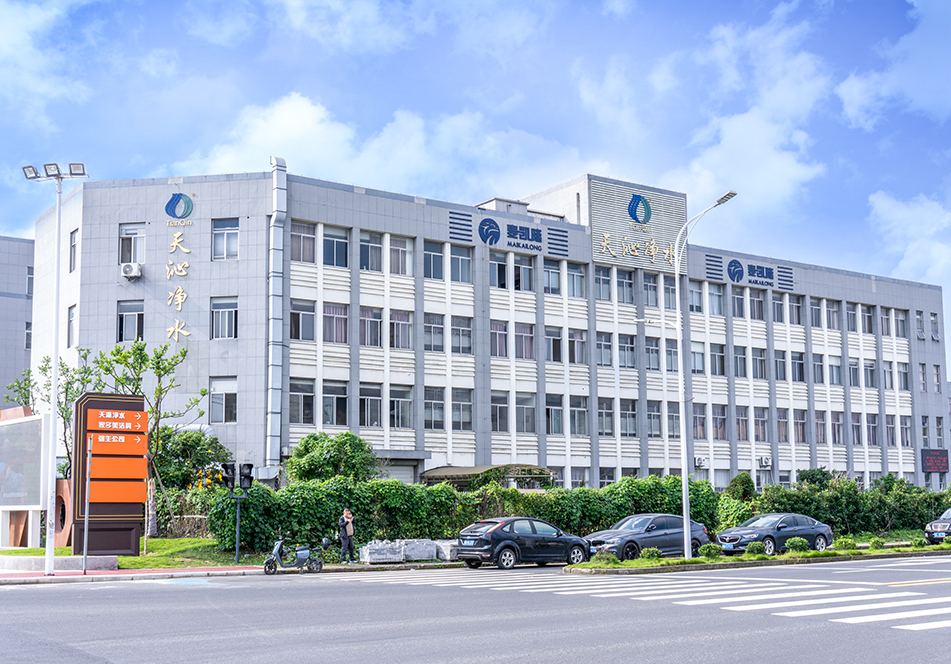
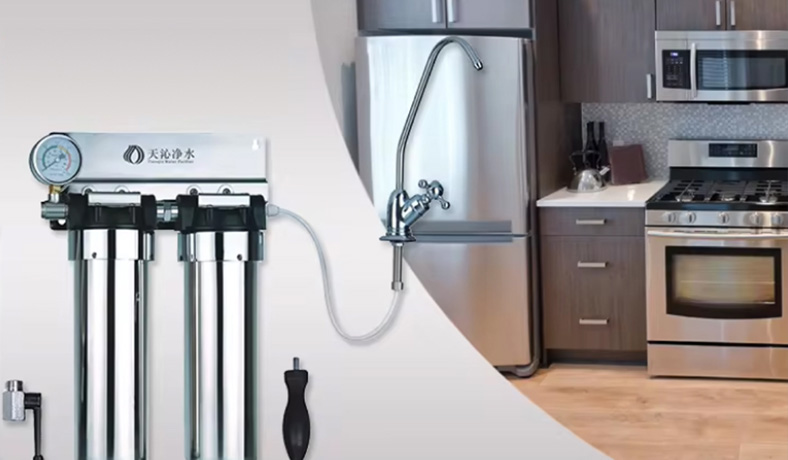

Yuyao Tianqin Water Purification Equipment Co., Ltd. has produced drinking water equipment in Yuyao, Zhejiang Province since 1998. As a Water Dispenser manufacturer, we build two families of machines: commercial straight drinking machines for shared facilities and electric instant hot water dispensers for point-of-use hot water. Both are assembled around multi-stage filtration, stainless steel and ABS body construction, and optional ultraviolet sterilization, and are shipped to the Middle East, Southeast Asia, Europe and North America.
Two Product Families, One Drinking-Water Platform
Our dispenser range is organised by how the machine is used rather than by cabinet style. High-traffic buildings need a floor-standing machine with a large hot tank, a reverse osmosis stage and a drainage point; staff pantries and cafés need hot water on demand within seconds at a defined cup temperature.
Commercial Straight Drinking Machine
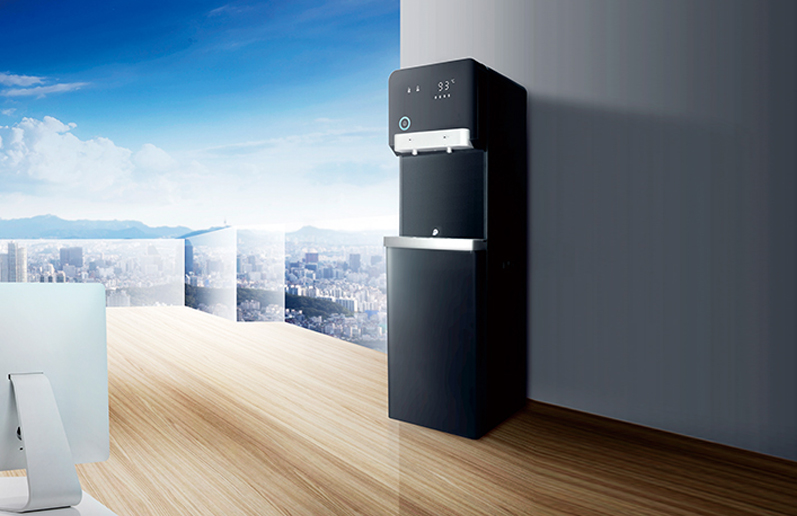
Floor-standing hot and cold units with 5-stage RO, 400 to 800 GPD capacity options, 304 stainless steel tanks and step or storage heating. Built for offices, schools, hospitals, canteens and shopping malls.
Commercial Straight Drinking Machine rangeElectric Instant Hot Water Dispenser
Countertop and standing units with rapid heating elements, selectable outlet temperatures and, on TQ-A10, an integrated 3-stage RO system with a quick-change compound filter.
Electric Instant Hot Water Dispenser modelsRange, Models and Application Fit
The table below matches each family to its filtration path, hot water performance and typical installation. Models within a family share body construction and controls, so a project can be standardised on one platform and varied by tank size, filtration capacity and sterilization.
| Product family | Models | Filtration / water path | Hot water performance | Installation | Typical application |
|---|---|---|---|---|---|
| Commercial straight drinking machines | TQ-T2, TQ-T2A, TQ-T2B, TQ-T1, TQ-T1A, TQ-Q2, TQ-Q3 | 5-stage RO: PP, carbon, 75 GPD membrane with 3.2 G tank, post-carbon; 400–800 GPD available; UV on TQ-T1 and TQ-Q2 | Hot & cold; ≥22 L/h at 25 °C inlet and 1350 W heating on TQ-T2; 2000 W on TQ-T2B | Floor-standing; TQ-T2 footprint 415 × 545 × 1490 mm | Offices, schools, hospitals, malls, canteens |
| Electric instant hot water dispensers | TQ-TR2C, TQ-A10, TQ-A11 | TQ-A10: 3-stage RO (PP + carbon + 75 GPD) in one compound quick-change cartridge | 24 L/h ≥90 °C on TQ-A10; 25/45/85/100 °C selections; 0.2 L/min draw | Countertop or standing; 4 L source tank on TQ-A10 | Pantries, cafés, restaurants, reception, meeting rooms |
| Household and light-commercial RO dispensers | TQ-P1, TQ-P2 | Reverse osmosis with hot and cold outlets | Hot and cold tank versions | Countertop or standing | Home, small office, clinic waiting areas |
| Treatment modules | Stainless steel pre-filter, Stainless steel RO system, UV sterilizer | Pretreatment and polishing ahead of or after the dispenser | Not applicable — water treatment only | Inline, wall or frame mounted | Turbid, hard or variable feed water |
Commercial Straight Drinking Machines for Shared Facilities
These machines treat incoming tap water through a five-stage RO chain and hold hot water in a 304 stainless steel tank. Step-type heating on TQ-T2 and TQ-T2A draws only when the tank needs reheating, while TQ-T1A uses heat storage for steadier recovery where draw-off is intermittent. TQ-T2B adds a larger tank and 2000 W heating for sites with long queues at break times.
- Rated 220 V / 50 Hz, 1350 W heating and 18 W heat preservation on TQ-T2, with noise ≤55 dB(A) for open-plan placement.
- Hot and cold outlets; hot water flow ≥22 L/h measured against a 25 °C feed.
- 400–800 GPD RO options so membrane capacity can be matched to daily draw rather than cabinet size.
- Double UV sterilization on TQ-T1 and customizable UV on the TQ-Q2 intelligent-control model.
- ABS shell with stainless steel panels and tank, kept accessible for filter and tank cleaning.
Electric Instant Hot Water Dispensers for Point-of-Use Hot Water
Instant models heat on demand instead of holding a full tank at temperature, which suits pantries where hot water is drawn in short bursts throughout the day. TQ-A10 delivers 24 L/h at ≥90 °C and offers four outlet settings — 25 °C, 45 °C, 85 °C and 100 °C — so one machine serves drinking water, tea and coffee preparation. Its 3-stage RO cartridge combines PP, carbon and a 75 GPD membrane in a single quick-change body.
- TQ-A10: 0.2 L/min flow, 4 L source water tank, 220–240 V 50/60 Hz electrical adapter.
- TQ-A11: 1600 W portable desktop unit for locations without a fixed dispenser position.
- TQ-TR2C: automatic standing model designed for direct tap water connection in household and light-commercial settings.
- Housings in plastic or stainless steel, selected for corrosion resistance, heat resistance and easy daily cleaning.
Materials, Water Path and Hygiene
Wetted parts follow the filtration stage: PP and carbon cartridges ahead of a thin-film composite RO membrane, a food-contact grade tank, and a post-carbon stage before the outlet. Ultraviolet sterilization, where fitted, sits at the end of the chain so treated water is not re-contaminated in storage. Cabinets use ABS or stainless steel depending on model, with removable panels for tank and outlet cleaning.
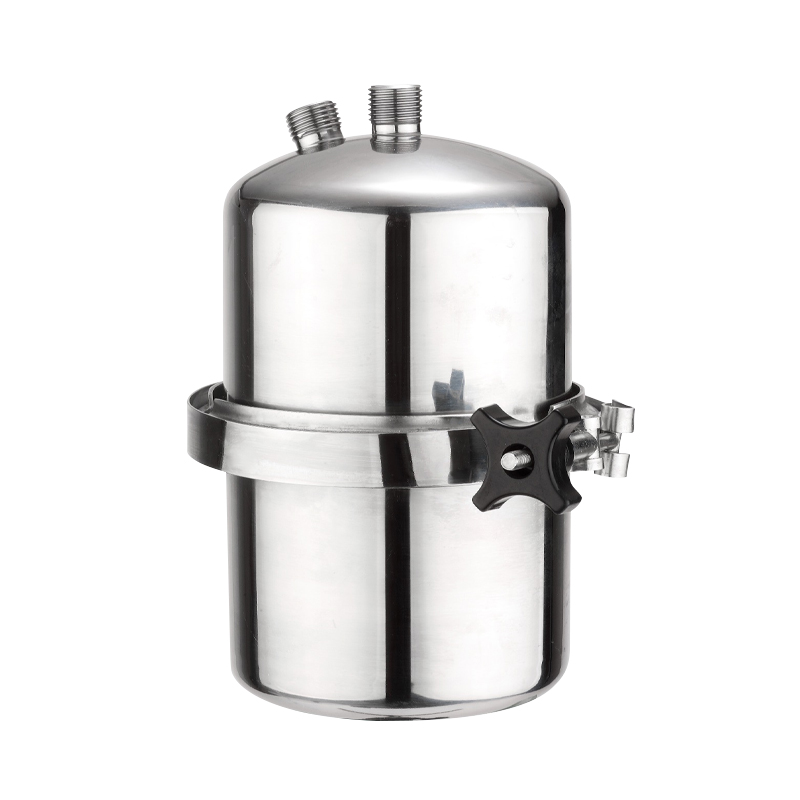
Where feed water is hard, turbid or heavily chlorinated, we add a stainless steel pre-filter or a larger stainless steel RO system ahead of the dispenser to protect membrane life and hold the planned service interval.
Capacity, Electrical Data and Installation Planning
Configuration starts from the number of users and the peak draw in the busiest half hour, then moves to the electrical and plumbing interface. Commercial units need a fixed cold-water feed, a drain for RO concentrate, a level floor position and a dedicated power point matched to the heating load.
- Supply: 220 V / 50 Hz standard on TQ-T2; confirm voltage and frequency for the destination market before production.
- Heating load: 1350 W on TQ-T2, 2000 W on TQ-T2B, 1600 W on TQ-A11 — size the circuit and earth connection accordingly.
- Water: municipal feed within the pressure and turbidity range assumed for the RO stage; pretreatment where hardness or sediment is high.
- Drainage: concentrate line from RO units must discharge to a suitable drain with falls, not to a standing receptacle.
- Clearance: allow front access for cartridge change and side clearance for ventilation around the compressor and power supply.
Controls, Sterilization and Integration
TQ-Q2 uses an intelligent control board with customizable UV sterilization, and the instant range uses electronic temperature selection instead of mechanical mixing. Controls are configured around the required outlet set, the heating logic — step, storage or instant — and whether sterilization is monitored by the board or by a separate indicator.
For projects that combine dispensers with central treatment, we coordinate the dispenser inlet with our Reverse Osmosis Water Purifier and ultraviolet stages so pressure, flow and filtration responsibility are clear at each point.
Quality Management and Documentation
Production runs under an ISO9001 quality management system in our 30,000 m² Yuyao facility, and our dispensers carry health licence approval from the Ministry of Health of the People's Republic of China. Tianqin is a member of the American Water Quality Association, holds more than ten national patents, and is one of the enterprises that drafted the industry standard for ultrafiltration membrane water purifiers for household and similar uses.
Shipment documentation is prepared against the approved configuration: model and voltage rating, filtration stage list, sterilization option, packing list and the operating instructions issued with the unit.
Information We Use to Configure Your Solution
A quotation is prepared from the project data below. Where a site is still at design stage, we work from the expected occupancy and feed water report and confirm the final model after the water analysis is available.
- Daily drinking water volume, number of users and peak draw per hour.
- Outlet requirement: ambient, cold, hot, or multiple fixed temperatures.
- Feed water source and analysis — TDS, hardness, chlorine, turbidity and supply pressure.
- Filtration preference: RO or ultrafiltration, membrane capacity in GPD, UV sterilization yes or no.
- Electrical supply, plug type and destination market requirements.
- Installation position, cabinet finish, branding, packaging and order quantity.
Filter Service, Spare Parts and Long-Term Operation
Service intervals follow feed water quality more than calendar time. PP and carbon stages are normally replaced several times a year on municipal water, while an RO membrane lasts considerably longer when pretreatment is maintained. The compound cartridge on TQ-A10 and the removable panels on commercial units shorten routine replacement, and quarterly cleaning of the tank and outlet is recommended in the operating instructions.
Frequently Asked Questions
What is the difference between a commercial straight drinking machine and an instant hot water dispenser?
Commercial straight drinking machines are floor-standing units with a stored hot tank and RO filtration, sized for shared facilities with continuous draw-off. Instant hot water dispensers heat on demand for pantries and counters, and can be supplied with an integrated 3-stage RO cartridge as on TQ-A10.
Which filtration stages are used in Tianqin dispensers?
The commercial range uses a five-stage chain — PP, carbon, RO membrane, post-carbon and optional UV — with a 75 GPD membrane and 3.2 G tank as standard, and 400 to 800 GPD membrane options. TQ-A10 packages PP, carbon and a 75 GPD membrane in one quick-change cartridge.
What feed water quality do the machines require?
Municipal tap water within the pressure and turbidity range assumed for the RO stage is suitable. For hard, turbid or heavily chlorinated supplies we add a stainless steel pre-filter or a larger RO system ahead of the dispenser to protect membrane life.
Can voltage, branding and configuration be customized?
Yes. We develop and produce according to customer drawings or samples, and confirm voltage, frequency, filtration capacity, sterilization option, cabinet finish and branding before production. Supply voltage must be stated on the order because it determines the heating element and control board specification.
What is the typical production lead time?
Our manufacturing schedule averages around 15 days, with the confirmed date set against order quantity, configuration and component availability at the time of order.
How often do filters need replacing?
Intervals are set by feed water quality and daily throughput. PP and carbon stages typically change several times a year, the RO membrane considerably less often, and quarterly cleaning of the tank and outlet is recommended alongside an annual inspection.


