 English
 中文简体
中文简体-
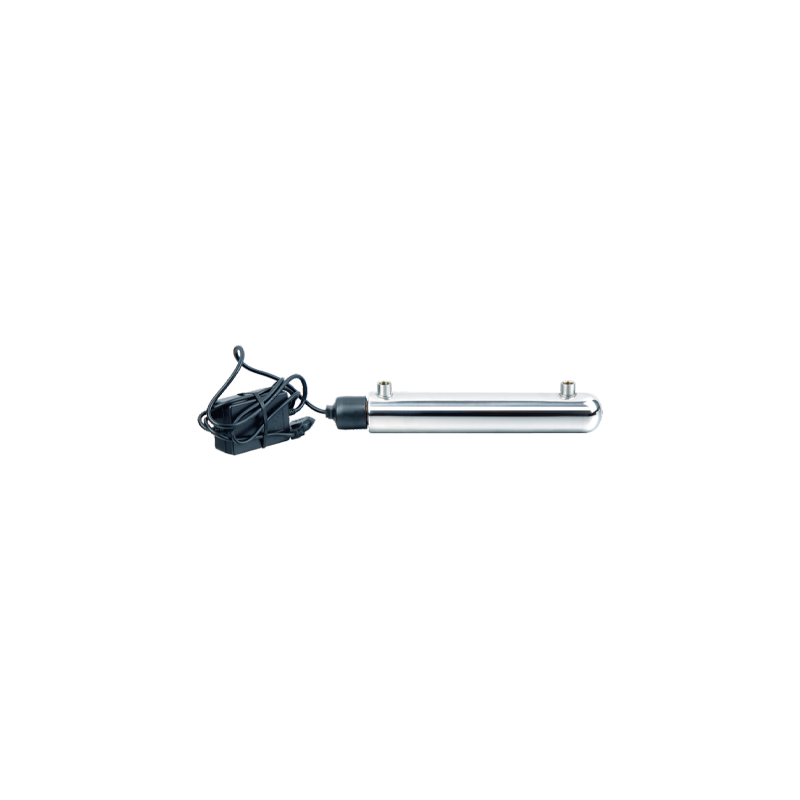 UV11W High-efficiency Intelligent UV Water Sterilizer Cat:Ultraviolet Water Sterilizer
The UV11W High-efficiency Intelligent UV Water Sterilizer is an advanced water purification system that offers convenience and reliability. This steri...
See Details -
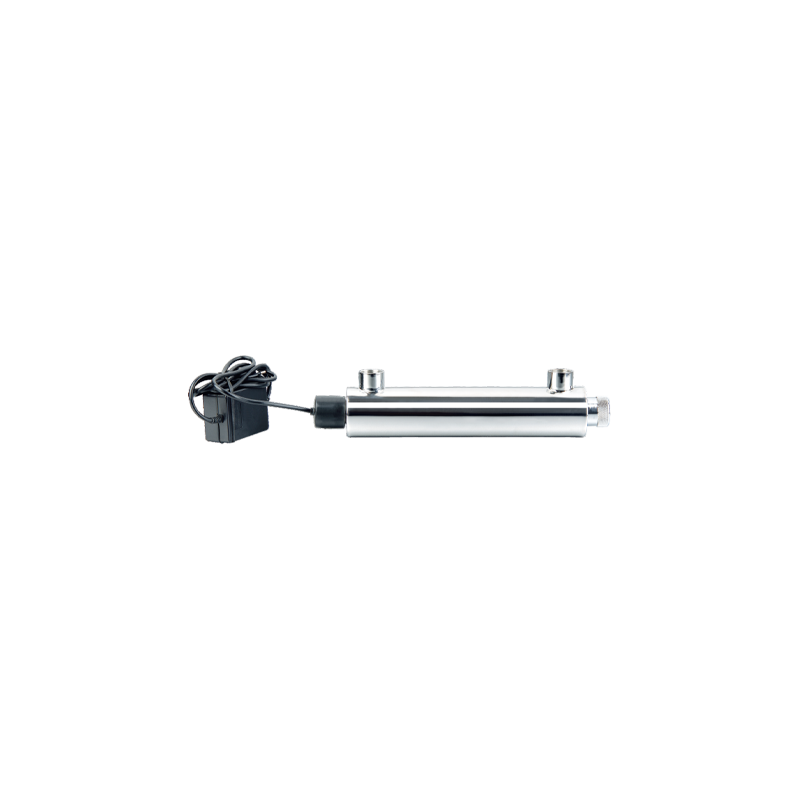 UV16W-A Household Stainless Steel UV Water Sterilizer Cat:Ultraviolet Water Sterilizer
The UV16W-A Household Stainless Steel UV Water Sterilizer is an innovative solution for ensuring safe and pure water in your home. Designed with durab...
See Details -
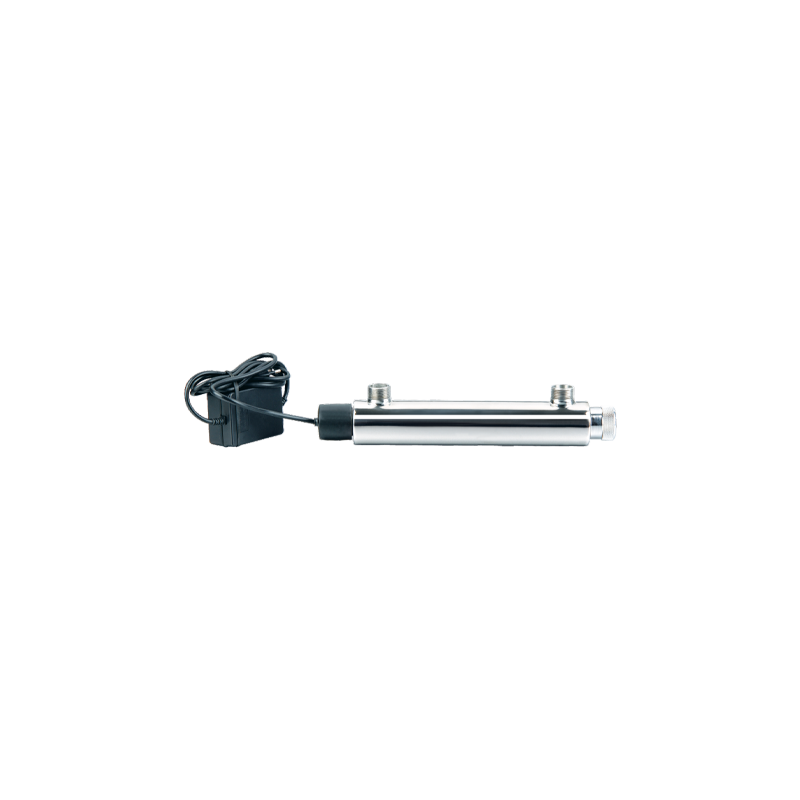 UV16W-B 304 Stainless Steel Water Purifier Ultraviolet Water Sterilizer Cat:Ultraviolet Water Sterilizer
UV16W-B 304 Stainless Steel Water Purifier Ultraviolet Water Sterilizer is an efficient water treatment equipment based on advanced ultraviolet disinf...
See Details -
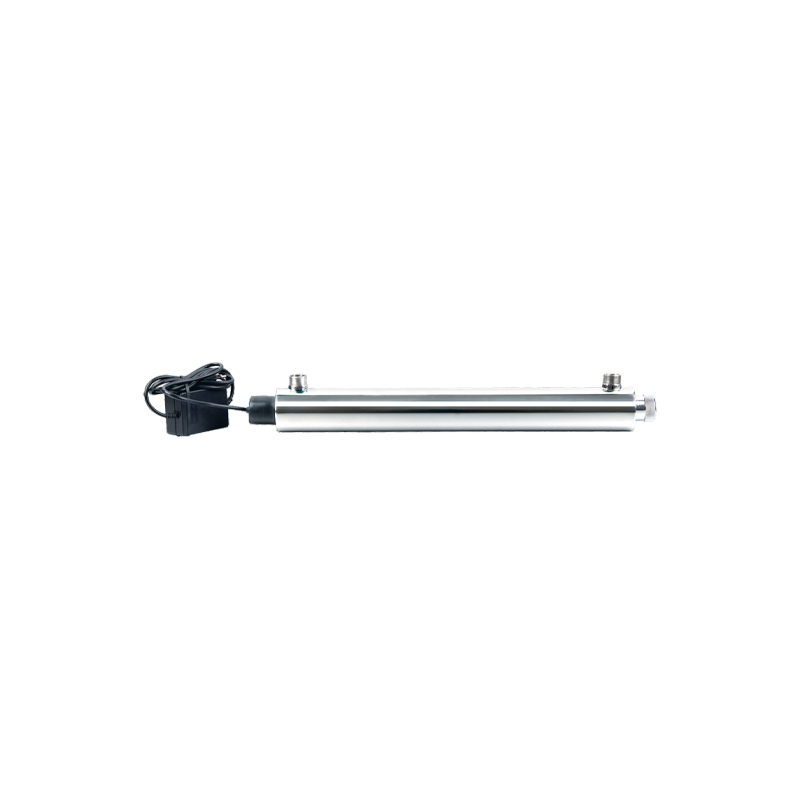 UV25W Stainless Steel Ultrafiltration Pre-Filtration UV Sterilizers For Water Cat:Ultraviolet Water Sterilizer
UV25W Stainless Steel Ultrafiltration Pre-Filtration UV Sterilizers For Water uses high-quality stainless steel materials, which have superb corrosion...
See Details -
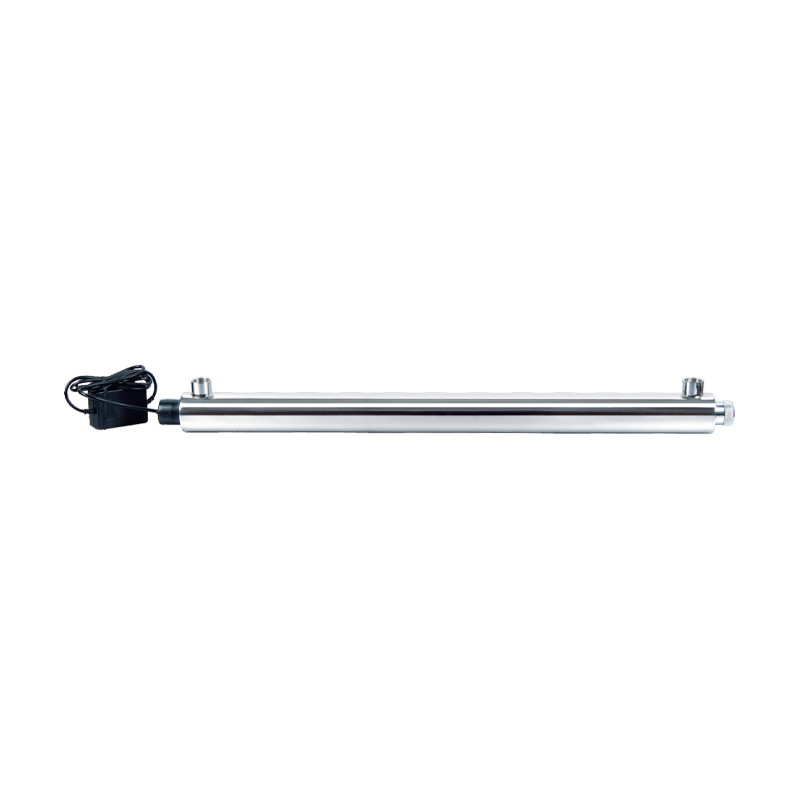 UV30W-55W Automatic Ultraviolet Sterilizer UV Filtration For Drinking Water Cat:Ultraviolet Water Sterilizer
The core advantage of UV30W-55W Automatic Ultraviolet Sterilizer UV Filtration For Drinking Water lies in its efficient and rapid disinfection capabil...
See Details -
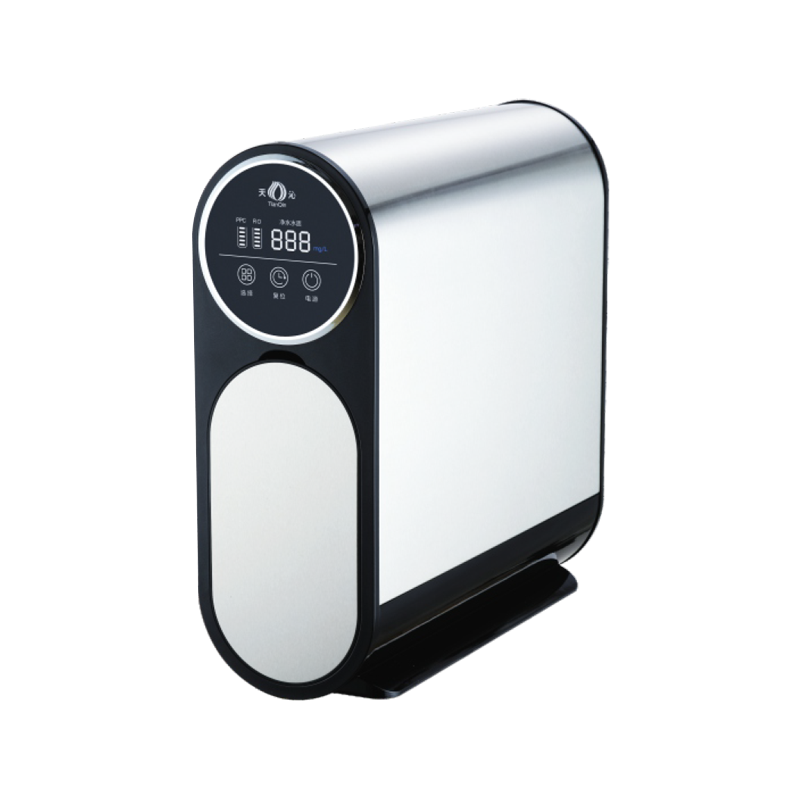 TQ-R03 Stainless Steel Booster Double Water Full Effect RO Water Purifier Cat:Stainless Steel Ro System
TQ-R03 Stainless Steel Booster Double Water Full Effect RO Water Purifier is a household water purification device that combines efficient water purif...
See Details -
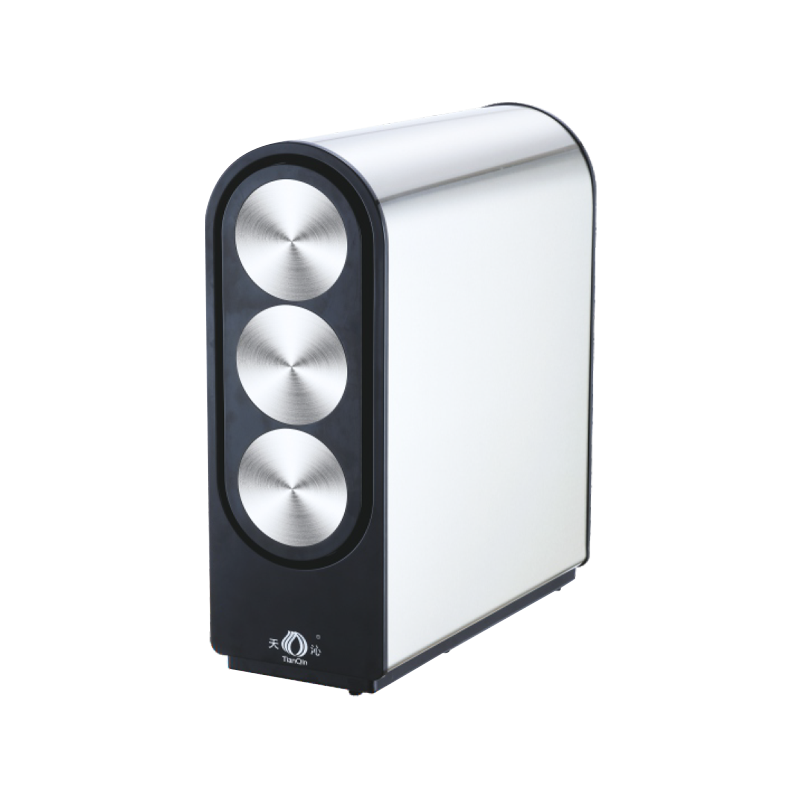 TQ-R05 Multifunctional Water Purification Source RO Water Purifier Cat:Stainless Steel Ro System
The TQ-R05 Multifunctional Water Purification Source RO Water Purifier is an advanced, versatile water purification solution designed for households a...
See Details -
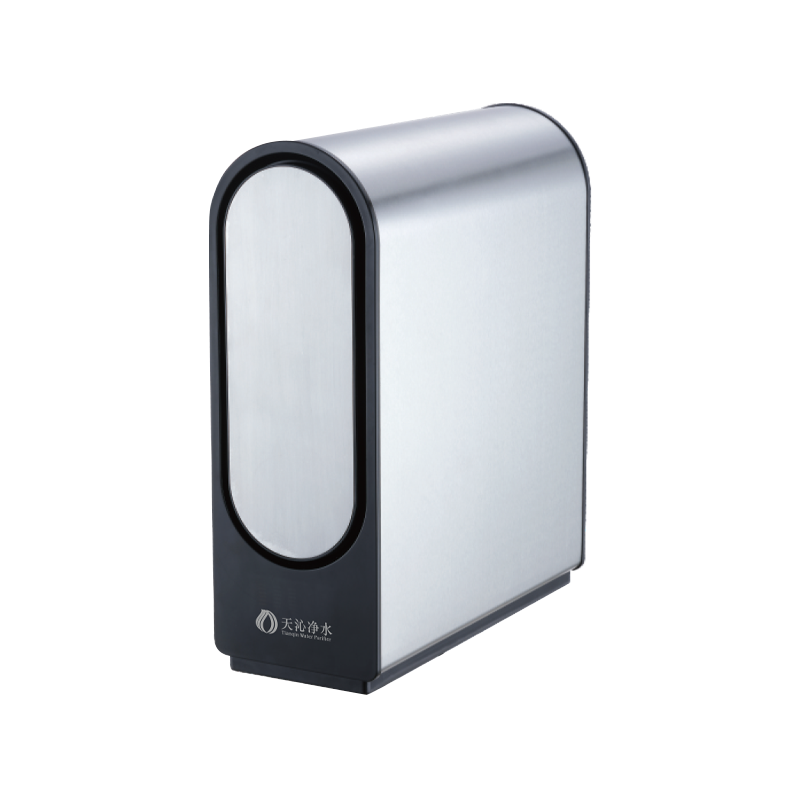 TQ-R06 Stainless Steel Environmentally Friendly RO Water Purifier Cat:Stainless Steel Ro System
The TQ-R06 Stainless Steel Environmentally Friendly RO Water Purifier combines advanced RO filtration technology, durable stainless steel housing, and...
See Details -
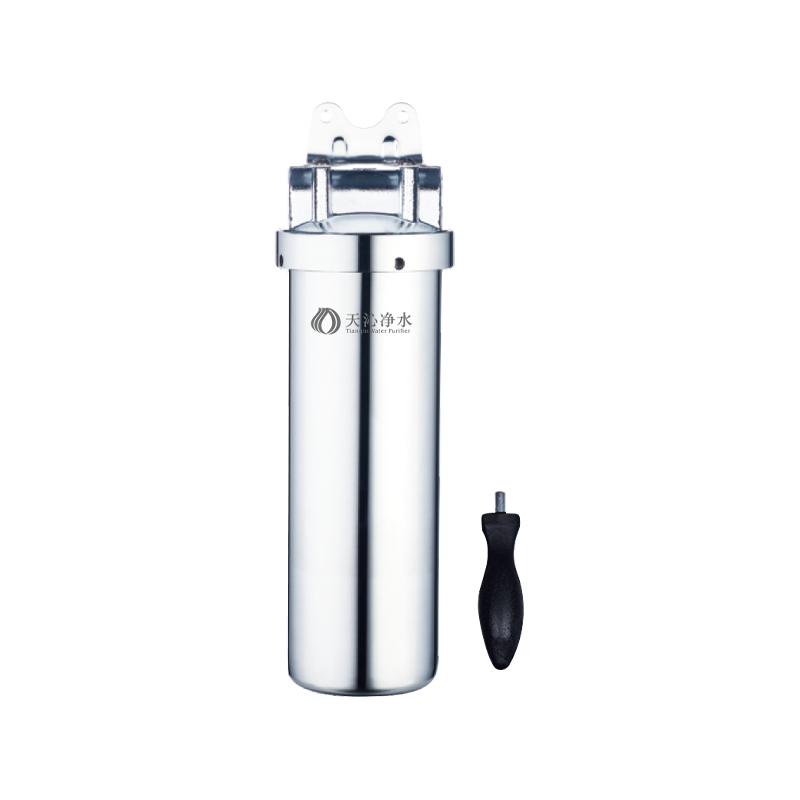 Stainless Steel Pure Double Water Pipe Water Purifier Cat:Stainless Steel Pipeline Water Purifier
The Stainless Steel Pure Double Water Pipe Water Purifier is an advanced water purification system designed to provide dual-mode purified water with e...
See Details -
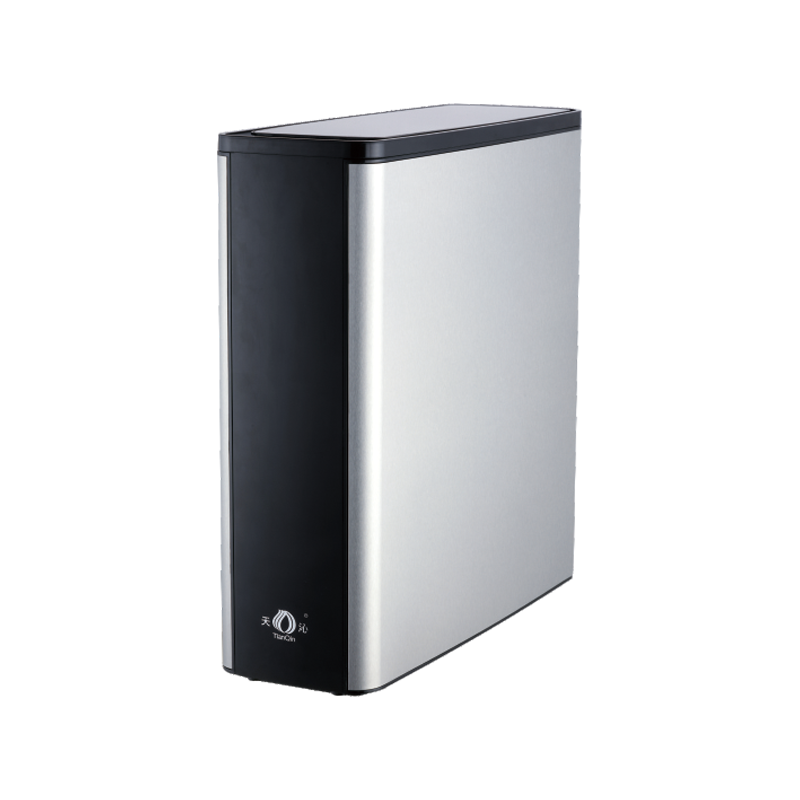 TQ-R08 Stainless Steel High-Flow RO Water Filter Cat:Stainless Steel Ro System
The Stainless Steel High-Flow RO Water Filter (TQ-R08) provides a powerful and effective solution for purifying drinking water, combining advanced rev...
See Details


 +86-0574-62381077/62386875

What Is a Backwash Water Filter? Key Facts for Whole-House Purification
Content
- 1 What Is a Backwash Water Filter?
- 2 How the Backwash Cycle Works
- 3 Why Whole-House Purification Systems Use Backwashing
- 4 Which Filters Can Be Backwashed?
- 5 Backwash vs. Non-Backwash Filtration
- 6 Choosing a Backwash Water Filter for Your Whole House
- 7 A Practical Whole-House Purification Layout
- 8 Conclusion
What Is a Backwash Water Filter?
Imagine a whole-house purification system that can clean its own filtering material without opening the housing. That is the promise of a backwash water filter: a granular media vessel that periodically reverses water flow to flush out captured solids. Instead of throwing away a spent cartridge, you simply let the filter rinse itself.
The practical consequence of this design is straightforward. A backwash filter can handle higher flow rates and longer service intervals than most cartridge systems, which makes it common in whole-house purification and commercial pre-treatment. The more you know about how backwashing works, the easier it is to choose between a media tank and a cartridge system.
How the Backwash Cycle Works
Normal filtration phase
During normal operation, water enters the top of the filter vessel, travels through the granular media, and exits through the bottom outlet. The media traps particles throughout the bed, not just on top. This depth filtration can capture sediment, oxidized iron, and other suspended matter far more effectively than a thin cartridge surface.
Backwash phase
When pressure across the bed rises to a set level or a timer triggers the control valve, the system reverses the flow. Water streams upward from the bottom distributor, lifts the media bed, and breaks apart clumps. The expanding bed releases the captured particles into the upward water flow, which carries them out through the drain line. Typical backwash duration is 5-15 minutes, depending on media weight and water temperature.
Rinse and return to service
After the dirty water is discarded, the valve returns to the normal flow direction. A short rinse at the end settles the media bed and clears any remaining turbidity from the lines. The unit is then back online, ready to filter again.
| Phase | Flow direction | Purpose | Typical duration |
|---|---|---|---|
| Filtration | Top to bottom | Capture suspended particles and contaminants | Continuous |
| Backwash | Bottom to top | Loosen media and flush out trapped material | 5-15 minutes |
| Rinse | Top to bottom | Settle the media bed and clean internal lines | 1-3 minutes |
Why Whole-House Purification Systems Use Backwashing
High flow capacity with less maintenance
Whole-house purifiers need to supply many fixtures at once. A 10-inch replacement cartridge is often limited to 5-10 gallons per minute and can clog quickly in sediment-laden water. A backwash media tank, by contrast, is sized in cubic feet of media and can deliver 10-20 gallons per minute while storing contaminants inside the media bed until the next cycle.
Protection for downstream treatment stages
A backwashing pre-filter removes the heavy load that can otherwise shorten the life of point-of-use membranes and carbon blocks. This is why whole-house designs often place a backwash tank before a softener, RO system, or UV sterilizer. It acts as a buffer, not a final polishing step.
Reduced operator intervention
With a timer or flow-meter control valve, the filter automatically flushes on schedule. Property owners do not need to measure pressure drop or take the system apart. The only regular check is adding water to the brine tank if the system includes a softener, or replacing bags of media after several years.
Which Filters Can Be Backwashed?
Multi-media and sand filters
Sand, garnet, and anthracite layers create a graduated bed that stops particles of different sizes. Backwashing evenly resets the layers and prevents the surface from forming a crust.
Activated carbon filters
Granular activated carbon removes chlorine, taste, and odor compounds. Backwashing is necessary because carbon fines and trapped organic matter otherwise plug the lower distributor and lower the contact time.
Specialty media for iron, sulfur, and manganese
Oxidizing media like Birm, Filox, and KDF rely on regular backwashing to rinse away the oxidized particles they collect. Without the flush cycle, the iron coating would cement the media into a solid block.
Reverse osmosis membranes are not backwashed. They are thin-film composites that would be damaged by rapid reverse flow. If your whole-house system includes an ultrafiltration membrane system or RO stage, place it after the backwash filter, not before it.
Backwash vs. Non-Backwash Filtration
Cartridge systems
Cartridge filters use a disposable pleated or string-wound element. The initial purchase cost is low, but the element must be replaced every one to six months in many residential applications. Each replacement costs money, creates waste, and exposes the system to bacteria during the change.
When backwash is the better choice
If your raw water carries visible sediment, iron, or hardness particles, a backwash tank is usually less work over a five-year period. The higher upfront cost is offset by the fact that the media can last three to ten years if the backwash cycle is set correctly.
When backwash is not enough
A standard backwash filter removes suspended solids and some chemical reactants, but it does not remove dissolved salts, nitrate, or bacteria. Those problems need a different process such as ion exchange, RO, or disinfection. The backwash filter should therefore be viewed as one part of a whole-house purification sequence, not a magical replacement for all treatment stages.
Choosing a Backwash Water Filter for Your Whole House
Match flow rate and media volume
The system must meet your peak simultaneous demand. A typical 3-4 bedroom house needs about 10-12 gallons per minute during showers and laundry. The filter tank must be sized to provide that flow without excessive pressure drop. Manufacturer databooks usually list the recommended service flow per square foot of bed area.
Choose the control valve type
Time-clock valves backwash at fixed intervals, such as every three days at 2 AM. Demand-initiated valves count gallons and only backwash after a set volume has been filtered. The demand valve saves water in households that are away for weekends, but it costs more. Either style must be matched with a properly designed drain line.
Consider water usage during backwash
Each cycle can consume 10-50 gallons of water. In areas with low well yield or a small septic system, you may need to discharge the backwash water into a neutralization tank or choose a larger media bed with a longer service interval, which reduces cycle frequency.
Evaluate housing material
Stainless steel vessels resist corrosion and handle higher temperatures better than fiberglass or polypropylene tanks in unconditioned spaces. For example, our intelligent automatic-flushing central water purifier uses a stainless steel housing and an automated control head, which is useful for installations where durability and low supervision matter.
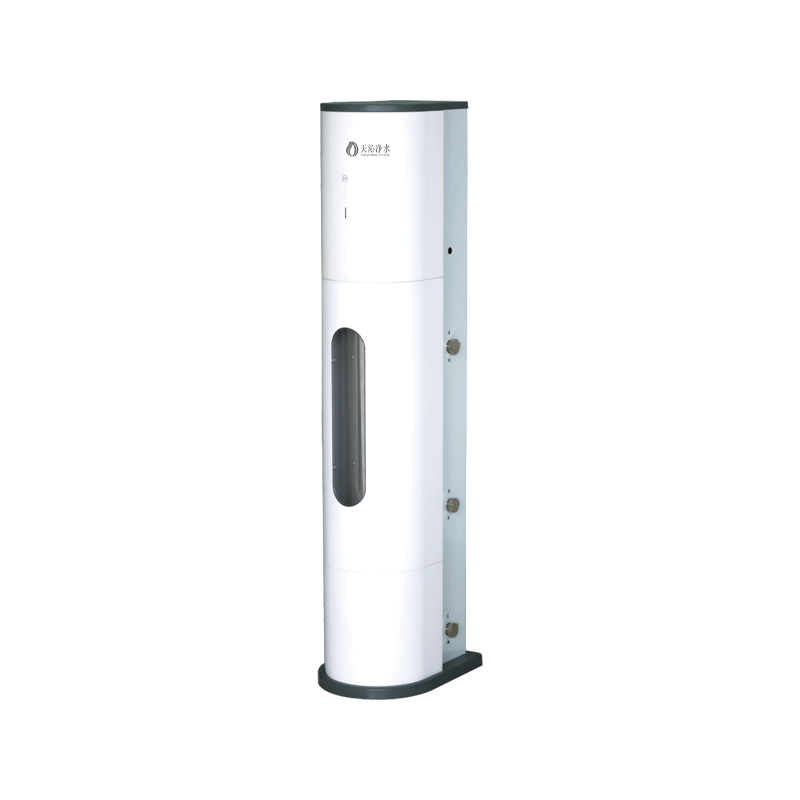 Custom TQ-ZY3500 TQ-ZY5000 Intelligent Automatic Flushing Central Water PurifierYuyao Tianqin Water Purification Equipment Co..Ltd. is China TQ-ZY3500 TQ-ZY5000 Intelligent Automatic Flushing Central Water Purifier Su...View Product →
A Practical Whole-House Purification Layout
The most reliable layout starts with a debris-straining prefilter. A high-performance stainless steel water prefilter removes leaves, sand, and coarse rust before they reach the media tank. This simple step dramatically extends the interval between backwash cycles.
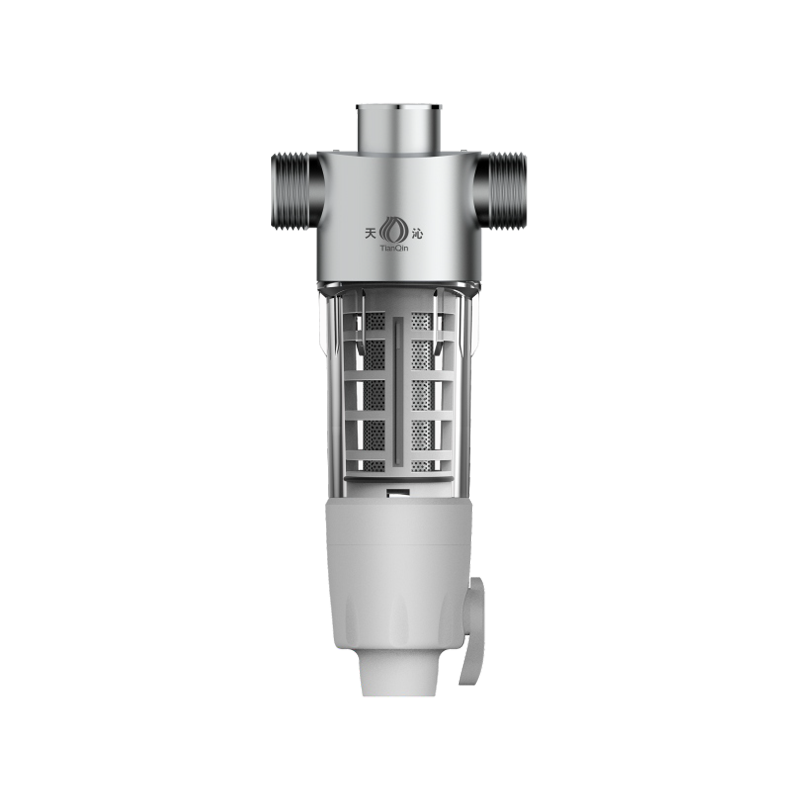 Custom TQ-QZ01 High-Performance Stainless Steel Water Pre-Filter Suppliers, OEM/Yuyao Tianqin Water Purification Equipment Co..Ltd. is China TQ-QZ01 High-Performance Stainless Steel Water Pre-Filter Suppliers and OEM ...View Product →
Next, the backwash media tank handles the main contaminant load. For municipal water with chlorine and seasonal taste, an activated carbon filter central water purifier is attractive because the carbon removes chlorine while the backwash action keeps the bed from compacting. After that, a point-of-use RO or UF unit can polish the water for drinking.
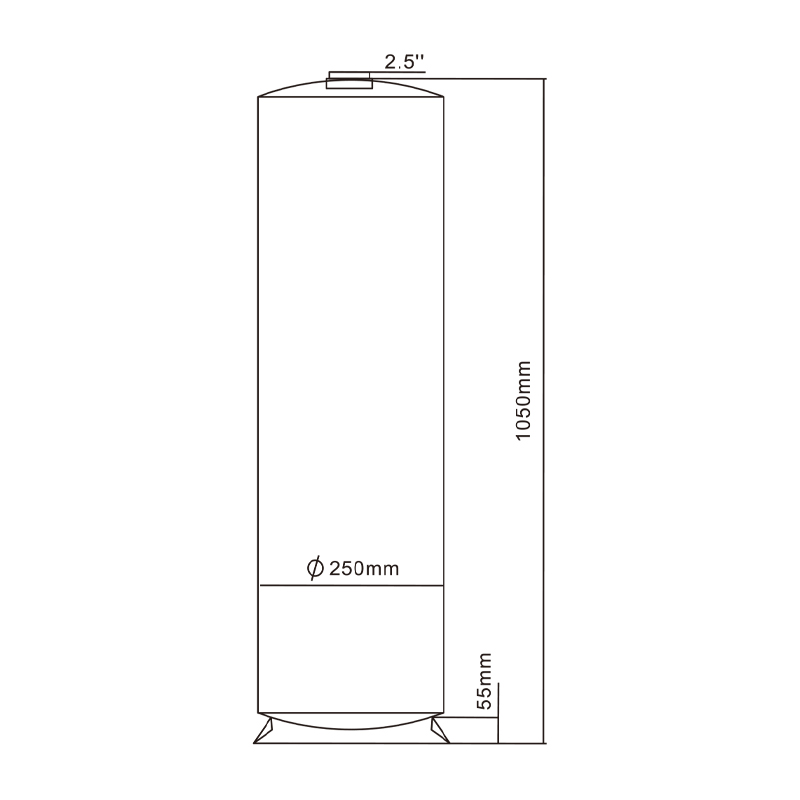 Custom Y2500 Y3000 Activated Carbon Filter Central Water Purifier Suppliers, OEMYuyao Tianqin Water Purification Equipment Co..Ltd. is China Y2500 Y3000 Activated Carbon Filter Central Water Purifier Suppliers and OEM...View Product →
When planning this sequence, pay attention to the manufacturer's pressure and flow specifications. A whole-house system works only when all components match the plumbing size and the control valve head is set to the actual service flow. As a manufacturer with more than two decades of experience building stainless steel housings, we publish the rated flows and pressure drops for each unit; you can review our manufacturing background before selecting a supplier.
Conclusion
A backwash water filter is best understood as a maintenance feature: reversed water flow resets a granular media bed and disposes of contaminants that a simple cartridge would absorb. For whole-house purification, this means longer media life, stable flow, and less routine labor.
The decision narrows down to feed water quality, space, and budget. If sediment or iron loads are moderate to heavy, a backwashing media filter will outperform cartridge filtration in operating cost. If the goal is simply polishing already treated municipal water, a compact cartridge system may be sufficient. In a full treatment train, start with a backwashing filter, protect it with a stainless steel prefilter, then finish with RO or disinfection. That approach will give you a whole-house purification system that stays efficient for years.
-
 Tel: +86-0574-62381077/62386875
-
 E-mail: leozhanglei@nbtianqin.net
-
 Add: Wuma Industrial Zone, Lubu Town, Yuyao City, Zhejiang Province, China.
Copyright © 2024 by Yuyao Tianqin Water Purification Equipment Co..Ltd.
All Rights Reserved.
 Wholesale Water Purifier Manufacturers

